Toe Walking in Toddlers
What toe walking means, when to be concerned, and how paediatric physiotherapy can help your child develop strong, efficient walking patterns.
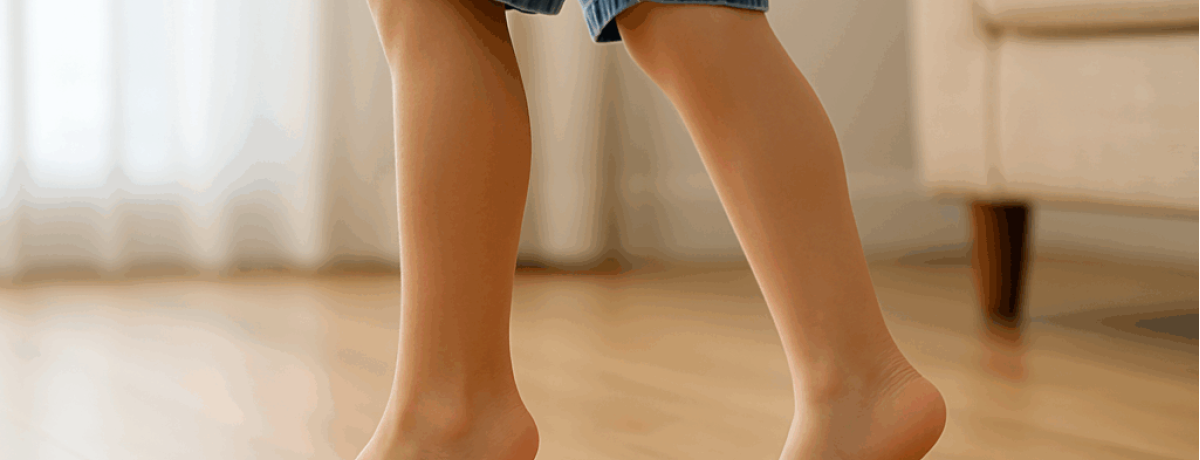
If your child is walking on their toes, you're not alone in wondering whether it's normal.
Toe walking is a common concern we see at Square One Therapy Hub, and while it can be part of typical development, persistent toe walking can also signal underlying issues that benefit from early support.
What is toe walking?
Toe walking is when a child walks on the balls of their feet, with their heels not making consistent contact with the ground. You might notice:
- Heels lifted most of the time
- Bouncy or tiptoe-style walking
- Difficulty standing flat-footed
Is toe walking normal?
In early development, yes — toe walking can be normal under the age of 2. As toddlers learn to walk, they experiment with movement patterns while building strength, balance and coordination. Occasional toe walking at this stage is usually not a concern.
When should you be concerned?
If your child is over 2 and still toe walking regularly, it's worth an assessment. Also seek advice if you notice:
- Toe walking most of the time
- Difficulty getting heels to the floor
- Tightness in calves or ankles
- Frequent tripping or poor balance
- Stiff or unusual walking patterns
What causes toe walking?
- Muscle tightness — tight calf muscles can limit ankle movement.
- Reduced ankle mobility — restricted range of motion at the ankle.
- Motor control & coordination challenges — balance and coordination still developing.
- Sensory preferences — some children prefer the sensation of toe walking.
- Habitual (idiopathic) toe walking — continues out of habit.
- Developmental conditions — in a smaller number of cases, linked to neurological or developmental conditions, which is why assessment matters.
Why early intervention matters
Persistent toe walking can lead to increasing muscle tightness, reduced ankle flexibility, altered walking patterns and decreased balance. The longer it continues, the more the body adapts — making it harder to change later.
How physiotherapy can help
At Square One Therapy Hub in Kogarah, we focus on identifying the reason behind your child's toe walking. A physiotherapy assessment may include observing how your child walks, assessing strength and balance, checking muscle length and joint mobility, and understanding sensory preferences.
Treatment may include:
- Stretching programs to improve calf flexibility
- Strengthening exercises for key muscle groups
- Balance and coordination activities
- Gait retraining — learning to walk with heels down
- Play-based strategies to encourage better movement patterns
When should you see a paediatric physio in Kogarah?
If you're in Kogarah, Carlton, Ramsgate, or the wider St George area, book an assessment if your child is over 2 and still toe walking, can't stand flat-footed comfortably, or you've noticed tightness or balance issues.
Frequently Asked Questions
Can toe walking go away on its own? Sometimes, but not always — persistent toe walking after age 2 is less likely to resolve without support.
Is toe walking linked to autism? It can be seen in children with autism, but most children who toe walk do not have autism.
Do shoes help stop toe walking? Shoes alone don't fix toe walking; addressing the underlying cause matters more.
Should I tell my child to stop toe walking? Constant correction isn't effective — focus on strength, mobility and movement patterns instead.
Will my child need ongoing therapy? It depends on the cause and severity.
Book an assessment
Square One Therapy Hub — Paediatric Physio in Kogarah, supporting children and families across the St George region. If you're concerned about your child's toe walking, contact us for clear answers and a plan forward.
More from the blog

How Paediatric Speech Therapy Supports Social Skills in Children
Why some children find friendship-building hard, the signs to look out for, and how speech therapy supports social communication, confidence and connection.

Pre-Writing Skills Before Learning to Write
The foundational skills children need before handwriting, signs they may need support, and play-based ways to build them at home.

Strength Training for Adolescents
How physiotherapy strengthening programs support adolescents with autism or intellectual disability to build strength, improve movement and gain confidence.