How Speech Therapy Supports Social Skills in Children
Why some children find friendship-building hard, the signs to look out for, and how speech therapy supports social communication, confidence and connection.
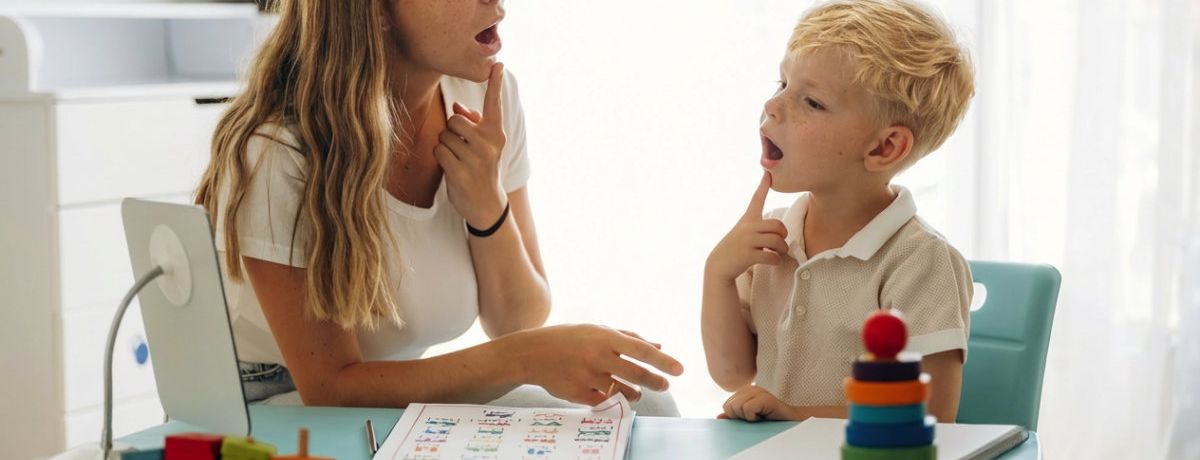
Most children pick up the language of friendship without being taught — reading a face, waiting a turn, keeping a conversation going. Some don't. You might notice your child hovering on the sidelines, struggling to keep a conversation going, or missing the social cues their peers seem to catch effortlessly.
If your child finds social settings overwhelming, it may have more to do with communication than with shyness. At Square One Therapy Hub in Kogarah, we support families across the St George area and wider Sydney with paediatric speech therapy that builds social communication, confidence and connection.
Signs Your Child May Need Speech Therapy for Social Skills
Children develop at different rates. But some signs suggest a child would benefit from speech therapy:
- Finds it hard to make friends
- Struggles to keep a conversation going
- Misses non-verbal cues
- Limited vocabulary for their age
- Gets frustrated when trying to talk
- Talks at people rather than with them
- Stands too close when talking
- Drifts off topic in conversation
- Misreads facial expressions
- Misses or misuses tone of voice
If several of these feel familiar, it's worth speaking with a certified practising speech pathologist — you can learn more about the profession via Speech Pathology Australia.
Why early friendships matter
Friendship in early childhood is often written off as "just play." It's how children learn to share, lose gracefully and see things from someone else's side.
- New skills — sharing, listening, working out disagreements.
- Empathy — noticing that other people feel and see things differently.
- Self-knowledge — kids learn who they are partly from how friends respond to them.
- Belonging and self-esteem — confidence grows when a child feels liked by a peer.
- Emotional practice — a low-stakes place to handle frustration, jealousy and excitement.
How Speech, Language & Communication Difficulties Impact Friendship
Speech difficulties
When speech is hard to understand, the primary barrier is intelligibility. Constant requests for clarification can lead to breakdowns, and peers may overlook the child for group roles.
Language difficulties
A child may struggle to find the right word or organise thoughts logically. Difficulty processing receptive language can lead to "rule-breaking" in games simply because instructions weren't understood.
Social communication (pragmatics)
Pragmatics is how we use language in context — reading body language, taking turns, staying on topic. When a child misses these cues, other kids can read them as odd or rude, even when they're kind.
How Speech Therapy Helps Children Make Friends
A speech pathologist diagnoses and treats communication difficulties. For social skills, therapy helps children:
- Build stronger conversational skills, listening and turn-taking
- Improve social confidence through role-play and supportive practice
- Understand tone, facial expressions, gestures, humour and personal space
- Express feelings clearly to resolve conflicts and maintain friendships
Building Social Skills at Home
Always follow guidance from your child's speech therapist. These simple strategies can reinforce therapy at home:
- Encourage mealtime conversations about their day and how they feel
- Encourage turn-taking during play or chores
- Model positive communication — clear language, eye contact
- Read together daily and ask questions about the story
- Talk about feelings openly to help label emotions
- Praise communication efforts, even imperfect ones
- Create opportunities for social interaction through playdates
- Encourage imaginative play — pretend, role-play, storytelling
- Give time to respond — allow pauses without pressure
Why starting early helps
The early years are when the brain is most adaptable. Starting support then can reduce the flow-on effects to learning, friendships and confidence later, and helps build a foundation for the classroom.
Book a paediatric speech pathology session in Kogarah
Square One Therapy Hub is a paediatric clinic in Kogarah, working with families across Carlton, Ramsgate, Hurstville and the wider St George region, with telehealth available across Sydney. NDIS welcome — self-managed and plan-managed participants supported.
If your child could benefit from support with social communication and friendship-building, contact us to book an assessment with our speech pathology team.
More from the blog
NDIS and Occupational Therapy: What's Actually Covered
OT under an NDIS plan — which supports are funded, how to use them, and how self- and plan-managed participants access services at Square One.
Late Talker or Speech Delay? A Sydney Parent's Guide
How to tell the difference between a late talker who'll catch up and a delay that needs support — milestones by age, red flags, and what helps in the meantime.
Messy Handwriting: When It's Worth Seeing an Occupational Therapist
Illegible writing, sore hands, avoiding written work — what's behind handwriting difficulties, what to expect at each school year, and when an OT assessment is worth it.