What Is Paediatric Occupational Therapy? A Parent's Guide
What does an occupational therapist do? Discover how paediatric OT helps children with dressing, school participation, sensory processing, emotional regulation and everyday confidence.
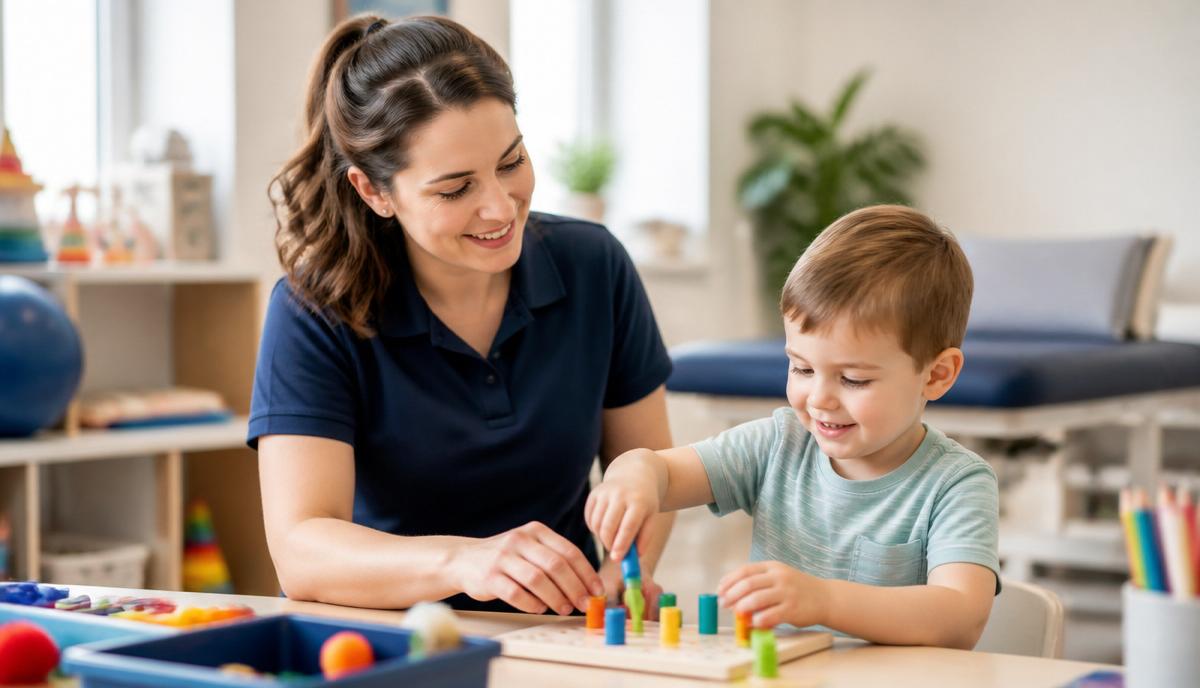
"What does an occupational therapist do?" is one of the first questions parents ask when OT comes up — and a fair one. The title is confusing, because "occupation" here doesn't mean work in the way adults use the word.
For children, occupations are the everyday activities that fill their day: getting dressed, eating breakfast, playing with friends, drawing, sitting in a classroom, managing big emotions, and going to the playground. A paediatric occupational therapist helps children build the skills they need to participate confidently in these daily activities.
At Square One Therapy Hub in Kogarah, our occupational therapists work with children and families across the St George region and wider Sydney, including Carlton, Hurstville, Ramsgate and Sans Souci.
What does an occupational therapist do?
An occupational therapist (OT) is a university-trained allied health professional who helps people participate in the activities that matter to them. In paediatrics, that means working with babies, children and adolescents to develop the physical, sensory, cognitive, social and emotional skills needed for daily life.
According to Healthdirect Australia, occupational therapists help people of all ages overcome barriers that prevent them from doing everyday activities. For children, those barriers might show up as difficulty with self-care, learning, movement, sensory processing, behaviour or social participation.
A paediatric OT's role typically includes:
- Assessing a child's strengths and challenges through observation, standardised assessments and parent interviews
- Setting goals with the family around meaningful daily activities
- Delivering therapy through play, practice and graded activities
- Adapting tasks or environments so the child can succeed
- Collaborating with parents, teachers, carers and other health professionals
- Supporting NDIS planning with reports such as Functional Capacity Assessments
What is paediatric occupational therapy?
Paediatric occupational therapy is the branch of OT focused on children from infancy through adolescence. It's built around how children actually learn — through play, and in the middle of family, school and community life.
The Raising Children Network explains that occupational therapy for children can support areas such as play, self-care, school skills and social participation. Therapy is shaped to each child and often looks like ordinary play — but every activity is chosen to build a specific skill.
At Square One Therapy Hub, our OTs support children with:
- Fine motor skills — holding a pencil, using scissors, doing buttons and zips
- Gross motor skills — balance, coordination, ball skills and playground participation
- Self-care and daily living — dressing, toileting, feeding, toothbrushing and hygiene
- Sensory processing — responding to sounds, textures, movement and busy environments
- Emotional regulation — managing frustration, anxiety, transitions and big feelings
- Attention and organisation — following routines, completing tasks and sitting for activities
- School readiness — pre-writing skills, classroom participation and independence
- Social skills — turn-taking, sharing, joining in play and reading social cues
How occupational therapy helps with daily "occupations"
The best way to understand what an OT does is to look at the activities children do every day.
Dressing and self-care
Getting dressed involves a surprising number of skills: balance, fine motor control, sequencing, body awareness and planning. A child who struggles with buttons, zips or knowing which way clothes go may become frustrated or avoid dressing independently. An OT breaks the task into manageable steps, builds underlying skills and may recommend adapted clothing or visual schedules.
School participation
School is one of the most complex occupations a child has. It requires sitting still, listening, writing, packing a bag, navigating the playground and managing social demands. A paediatric OT can assess where a child is having difficulty and provide strategies for the classroom, home and therapy sessions. Learn more about our school readiness assessments and paediatric occupational therapy services.
Emotional regulation
Some children feel overwhelmed by everyday experiences — loud noises, unexpected changes, sensory input or social situations. OTs use sensory strategies, co-regulation techniques, visual supports and coping skills to help children recognise, express and manage their emotions in safe, practical ways.
Play and social participation
Play is the primary occupation of childhood. It is how children explore, learn, make friends and develop creativity. OTs support children who find play challenging — whether due to motor difficulties, sensory preferences, limited ideas or trouble joining peers — so they can connect and have fun.
What happens in a paediatric occupational therapy session?
Sessions at Square One are child-led and built around your child's goals. Your child's OT will:
- Build rapport through play and conversation
- Assess skills using standardised tools and clinical observation
- Set goals with you and your child around meaningful activities
- Use play-based activities to practise targeted skills
- Provide home strategies so progress continues between sessions
- Review progress regularly and adjust goals as your child grows
Therapy might happen at our Kogarah clinic, via telehealth, or in consultation with your child's school or childcare setting.
When should my child see an occupational therapist?
Parents often wonder whether their child is "just a bit behind" or whether an assessment would help. Some common signs that paediatric OT may be beneficial include:
- Avoiding or becoming distressed during self-care tasks like dressing or toothbrushing
- Difficulty with handwriting, drawing or using scissors
- Clumsiness, frequent trips or bumps, or trouble with playground equipment
- Sensitivity to noise, textures, smells, movement or busy environments
- Trouble sitting still, paying attention or following routines
- Big emotional reactions that are hard to calm
- Difficulty making friends or joining group play
- Delays in school readiness skills
- A diagnosis such as autism, ADHD, developmental delay or sensory processing differences
If you're unsure, a conversation with an OT can help you decide whether assessment or therapy is the right next step.
How is paediatric OT different from physiotherapy or speech pathology?
While there is overlap, each profession has a primary focus:
- Occupational therapy focuses on participation in daily activities — self-care, school, play, sensory processing and emotional regulation.
- Physiotherapy focuses more specifically on movement, strength, coordination, gait and gross motor development. Learn about our paediatric physiotherapy services.
- Speech pathology focuses on communication, language, speech sounds, social communication and feeding. Learn about our paediatric speech pathology services.
At Square One Therapy Hub, our OTs, physiotherapists and speech pathologists share notes and set goals together, so a child who needs more than one isn't left with three disconnected plans.
NDIS and paediatric occupational therapy
We welcome self-managed and plan-managed NDIS participants for paediatric occupational therapy. We can also provide Functional Capacity Assessments and progress reports to support NDIS planning and reviews.
Book a paediatric occupational therapy appointment in Kogarah
If you think OT might help your child, the next step is a conversation. Square One Therapy Hub is a paediatric allied health clinic in Kogarah, working with children across Sydney's St George and Sutherland Shire regions.
Contact us to book or ask a question.
More from the blog

Gross Motor Milestones 0-5: A Parent Checklist
A month-by-month, year-by-year guide to gross motor development — what to expect, when to worry, and how a paediatric physio can help.

NDIS and Occupational Therapy: What's Actually Covered
OT under an NDIS plan — which supports are funded, how to use them, and how self- and plan-managed participants access services at Square One.

Late Talker or Speech Delay? A Sydney Parent's Guide
How to tell the difference between a late talker who'll catch up and a delay that needs support — milestones by age, red flags, and what helps in the meantime.