Toe Walking in Toddlers
What toe walking means, when to be concerned, and how paediatric physiotherapy can help your child develop strong, efficient walking patterns.
Written by Pavan, Physiotherapist.
If your child walks on their toes, it's natural to wonder whether it's normal.
Toe walking is a common concern we see at Square One Therapy Hub, and while it can be part of typical development, persistent toe walking can also signal underlying issues that benefit from early support.
What is toe walking?
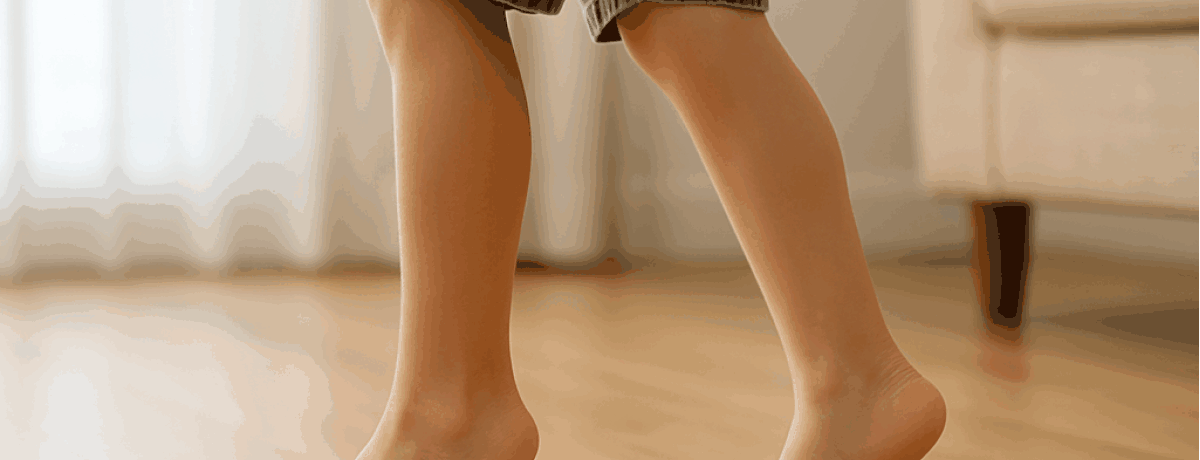
Toe walking is when a child walks on the balls of their feet, with their heels not making consistent contact with the ground. You might notice:
- Heels lifted most of the time
- Bouncy or tiptoe-style walking
- Difficulty standing flat-footed
Is toe walking normal?
In early development, yes — toe walking can be normal under the age of 2. As toddlers learn to walk, they experiment with movement patterns while building strength, balance and coordination. Occasional toe walking at this stage is usually not a concern. The Raising Children Network also notes that occasional toe walking in toddlers is common as they develop.
When should you be concerned?
If your child is over 2 and still toe walking regularly, it's worth an assessment. Also seek advice if you notice:
- Toe walking most of the time
- Difficulty getting heels to the floor
- Tightness in calves or ankles
- Frequent tripping or poor balance
- Stiff or unusual walking patterns
What causes toe walking?
- Muscle tightness — tight calf muscles can limit ankle movement.
- Reduced ankle mobility — restricted range of motion at the ankle.
- Motor control & coordination challenges — balance and coordination still developing.
- Sensory preferences — some children prefer the sensation of toe walking.
- Habitual (idiopathic) toe walking — continues out of habit.
- Developmental conditions — in a smaller number of cases, linked to neurological or developmental conditions, which is why assessment matters.
Why it's worth acting early
Persistent toe walking can lead to increasing muscle tightness, reduced ankle flexibility, altered walking patterns and decreased balance. The longer it continues, the more the body adapts — making it harder to change later.
How physiotherapy can help
At Square One Therapy Hub in Kogarah, our physiotherapy team focuses on identifying the reason behind your child's toe walking. A physiotherapy assessment may include observing how your child walks, assessing strength and balance, checking muscle length and joint mobility, and understanding sensory preferences.
Treatment may include:
- Stretching programs to improve calf flexibility
- Strengthening exercises for key muscle groups
- Balance and coordination activities
- Gait retraining — learning to walk with heels down
- Play-based strategies to encourage better movement patterns
When should you see a paediatric physio in Kogarah?
If you're in Kogarah, Carlton, Ramsgate, or the wider St George area, book an assessment if your child is over 2 and still toe walking, can't stand flat-footed comfortably, or you've noticed tightness or balance issues.
Book an assessment
Square One Therapy Hub runs paediatric physio in Kogarah for families across the St George region. NDIS welcome — self-managed and plan-managed participants supported. If you're worried about your child's toe walking, contact us for clear answers and a plan forward.
More from the blog

NDIS and Occupational Therapy: What's Actually Covered
OT under an NDIS plan — which supports are funded, how to use them, and how self- and plan-managed participants access services at Square One.

Late Talker or Speech Delay? A Sydney Parent's Guide
How to tell the difference between a late talker who'll catch up and a delay that needs support — milestones by age, red flags, and what helps in the meantime.

Messy Handwriting: When It's Worth Seeing an Occupational Therapist
Illegible writing, sore hands, avoiding written work — what's behind handwriting difficulties, what to expect at each school year, and when an OT assessment is worth it.